2025
Bio-Inspired Origami Swimmer
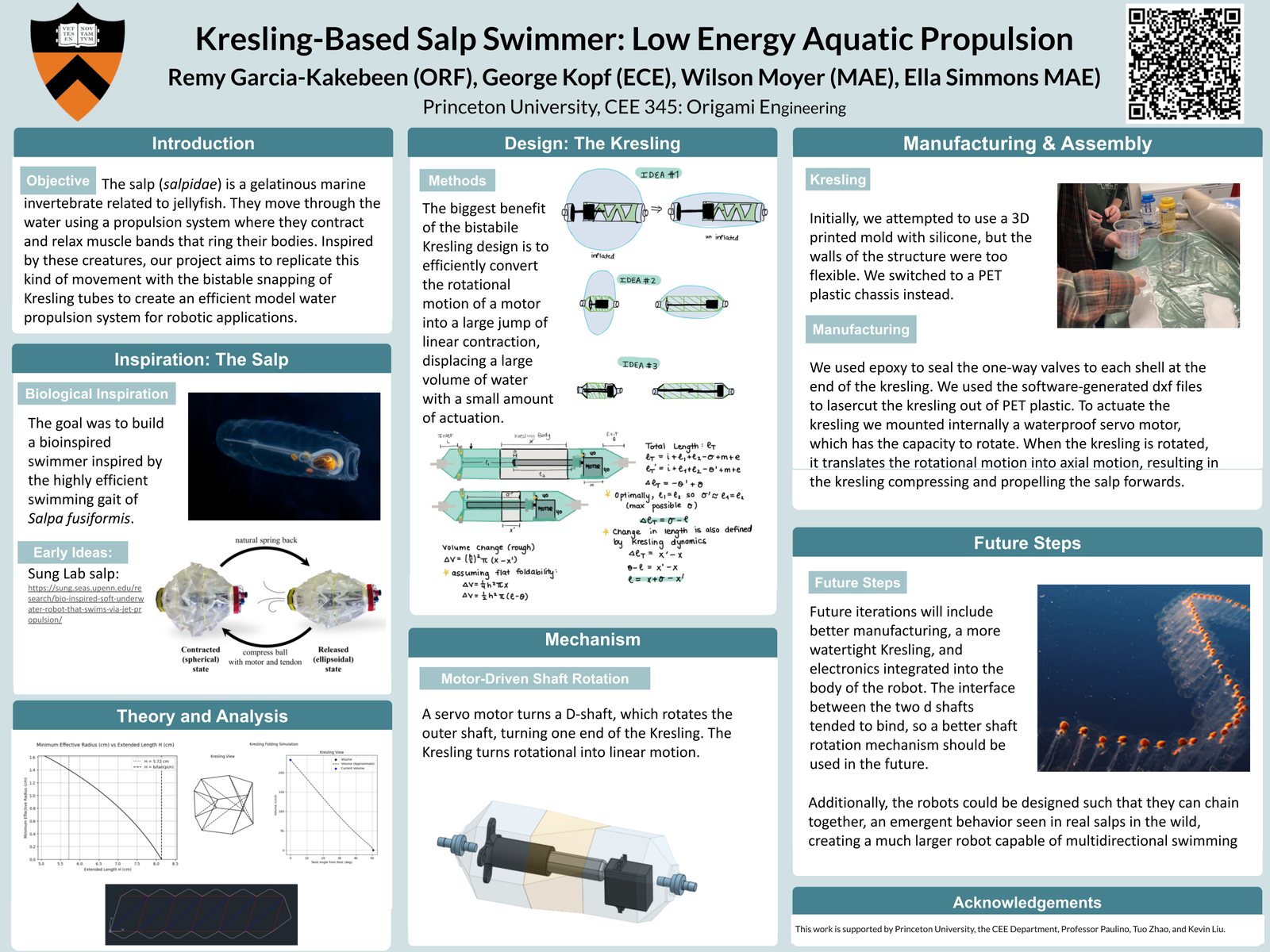
Designed and prototyped a bio-inspired aquatic robot that uses an origami Kresling structure to replicate salp-like jet propulsion. The system converts rotational motor input into linear contraction and expansion, enabling non-invasive underwater propulsion for exploration of underwater environments and ecosystems.
- Role
- Designed & manufactured compression/expansion mechanism, led fabrication of origami structure
- Team
- Team of 4
- Course
- CEE 345 Origami Engineering
- Tools
- Origami Theory, CAD (onshape), Mold Creation, Laser Cutting, 3d Printing, Arduino, Waterproofing
- Links
- Final report (PDF)Poster
- 3week project
- 4person team
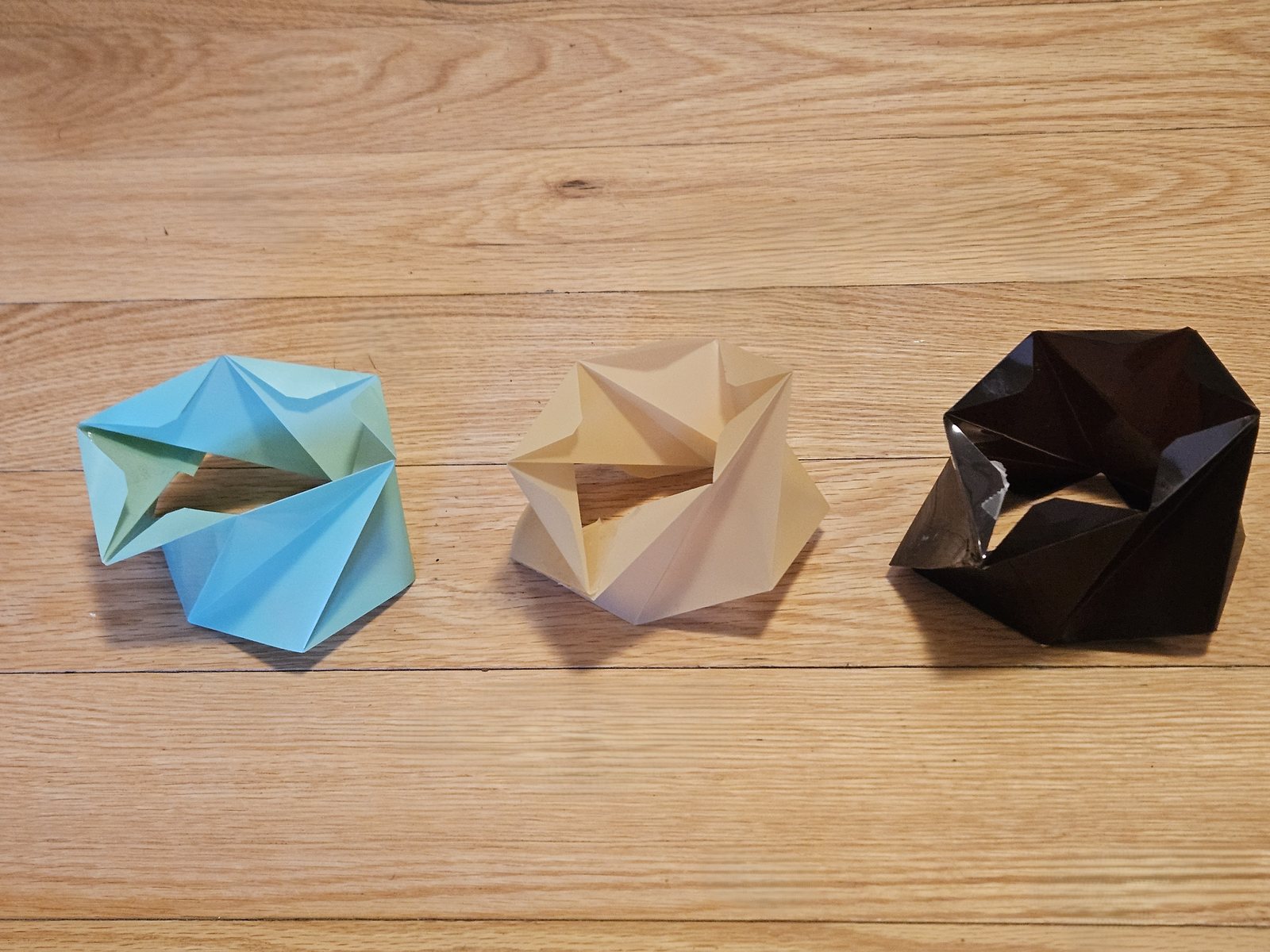
- PETlaser-cut Kresling body
Background
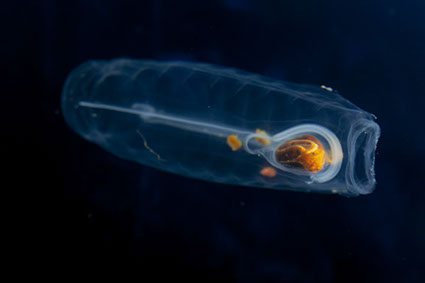
As part of CEE 345: Origami Engineering with Professor Glaucio Paulino, I worked in a group of 4 people on a 3-week project to create an engineering project utilizing the unique toolkit provided by origami structures. Our project ended up being the design and construction of a bioinspired swimmer. The salp (salpidae) is a gelatinous marine invertebrate related to jellyfish. They move through the water using a propulsion system where they contract and relax muscle bands that ring their bodies. Inspired by these creatures, our project aimed to replicate this kind of movement with the bistable snapping of Kresling tubes to create an efficient model water propulsion system for robotic applications.
Timeline
-
01
Week 1: Design
The Kresling geometry was parameterized using Python to compute fold angles, heights, and internal clearances. Volume change was approximated analytically and numerically to estimate thrust potential. Custom code generated DXF files for laser cutting and simulated folding behavior across twist angles, enabling rapid iteration and validation before fabrication.
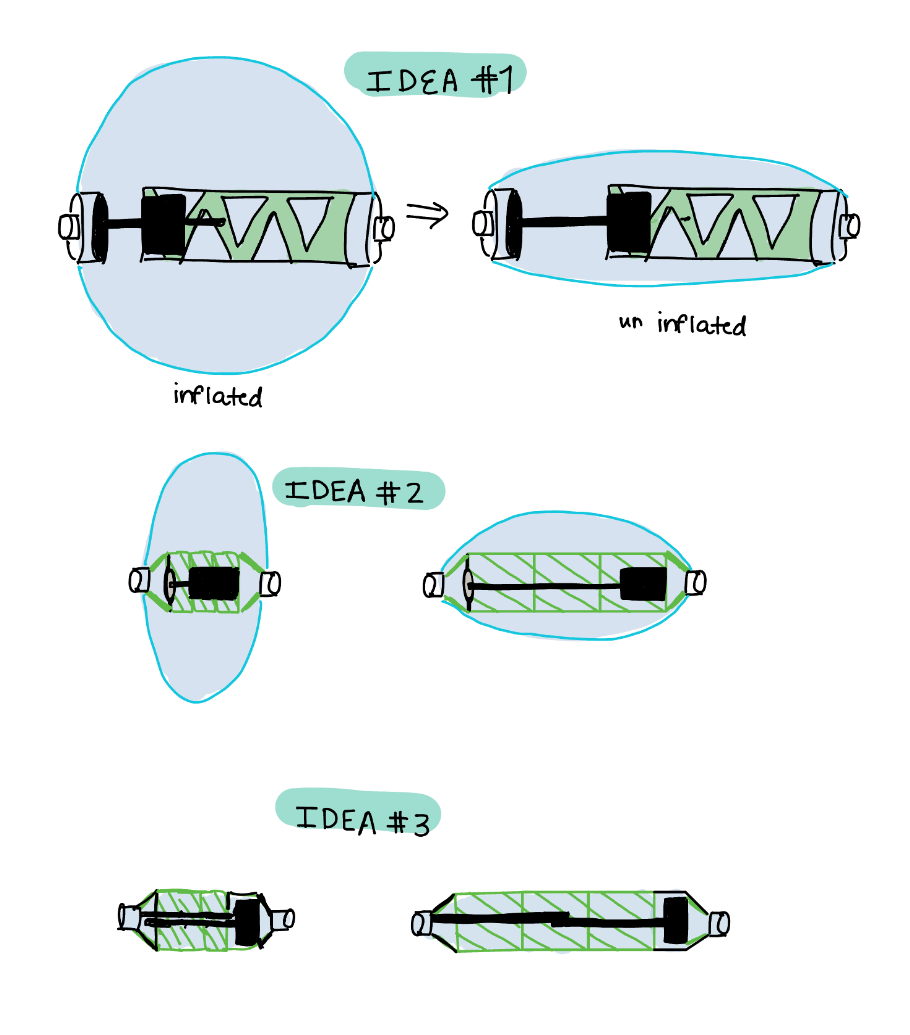
Brainstorming the actuation mechanism. 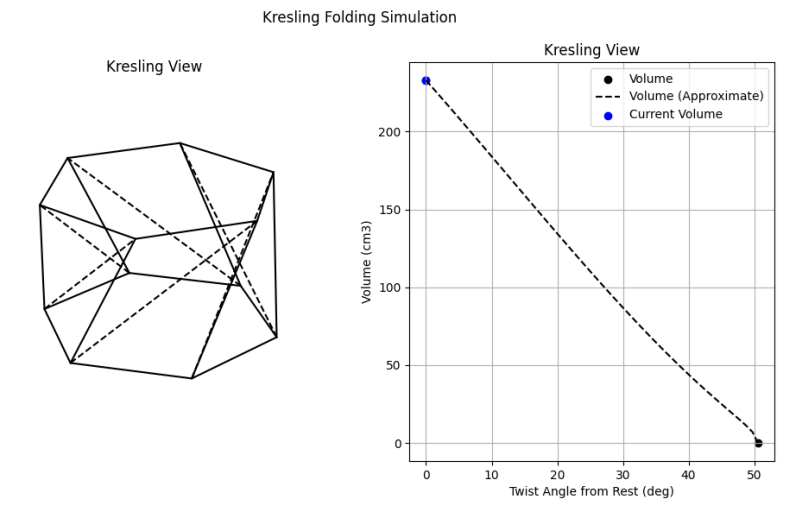
Kresling folding simulation: volume against twist angle. 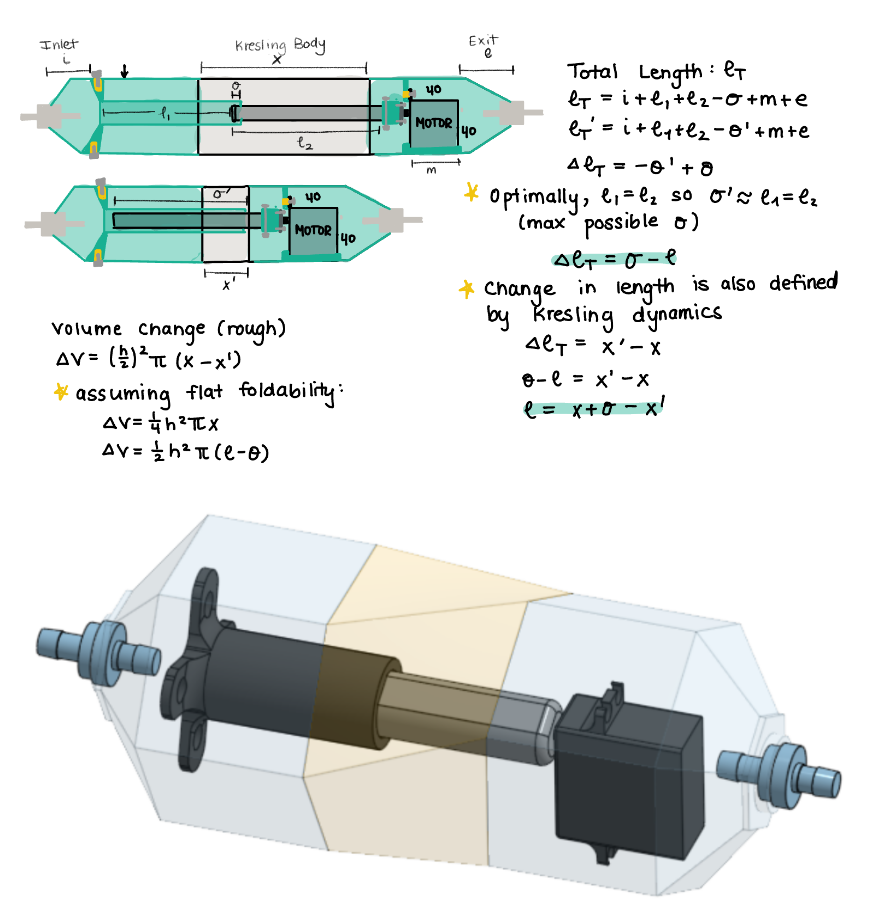
CAD of the swimmer. -
02
Week 2: Manufacturing
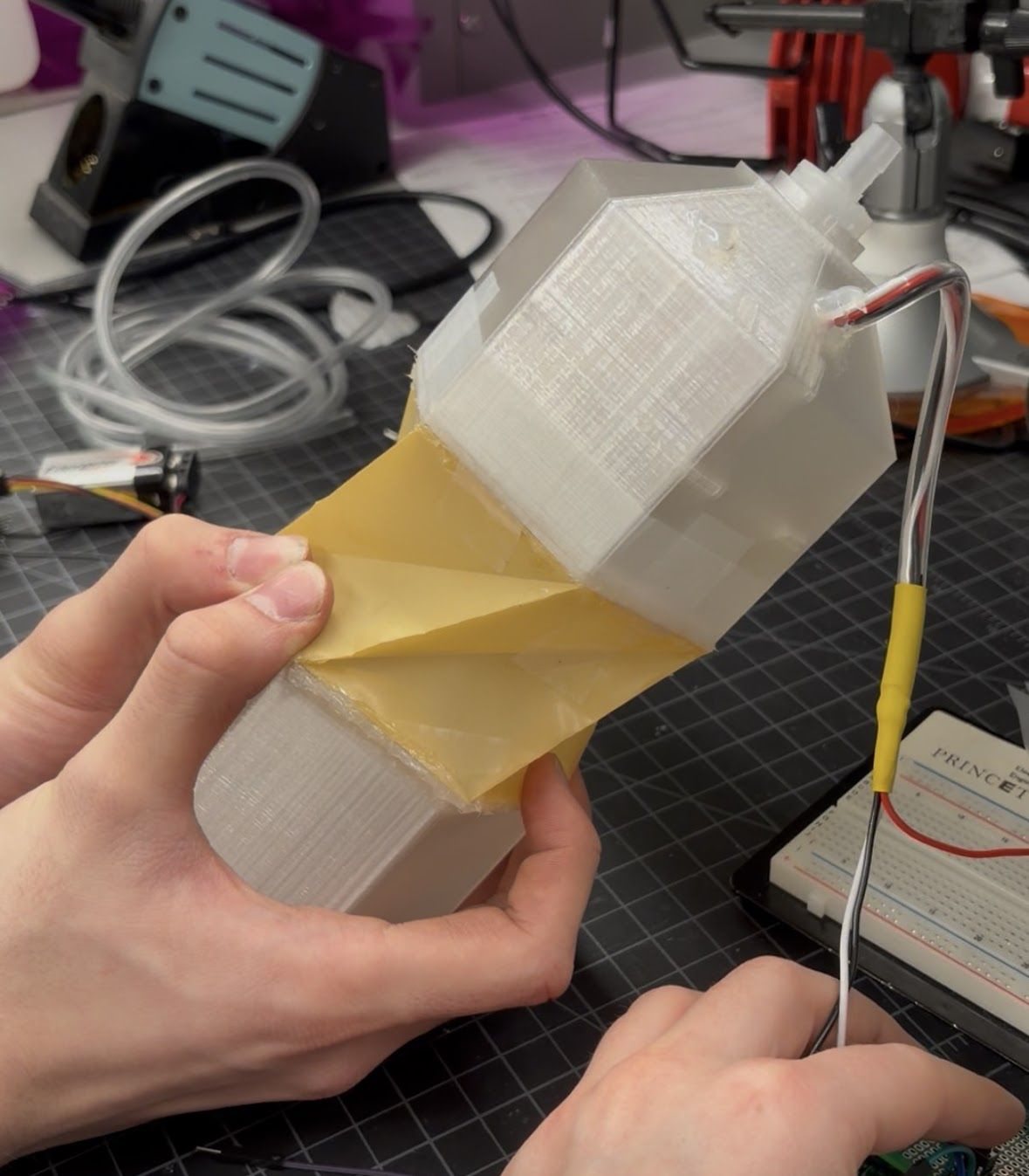
Early attempts used cast silicone Kreslings formed in 3D-printed molds, but inconsistent thickness and excessive flexibility meant that the structure did not maintain the geometry needed for the Kresling-inspired design. We then pivoted to laser-cut PET, which, while still somewhat flexible, was rigid enough to hold the geometry required, allowing the material to bend at the creases, and keep somewhat rigid panels. The end caps, sliding D shafts, and interfaces between the end caps and Kresling were all 3D printed. For later prototypes, we replaced the 3D printed inner shaft with one made of metal, since the D shafts kept catching on one another, likely due to the tiny ridges of the 3D printed material.
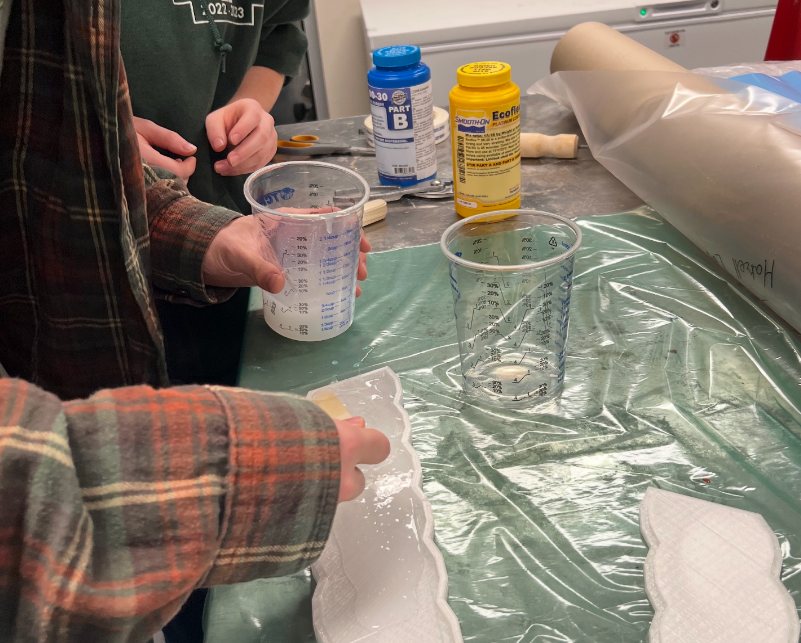
Mold making for the silicone Kresling. 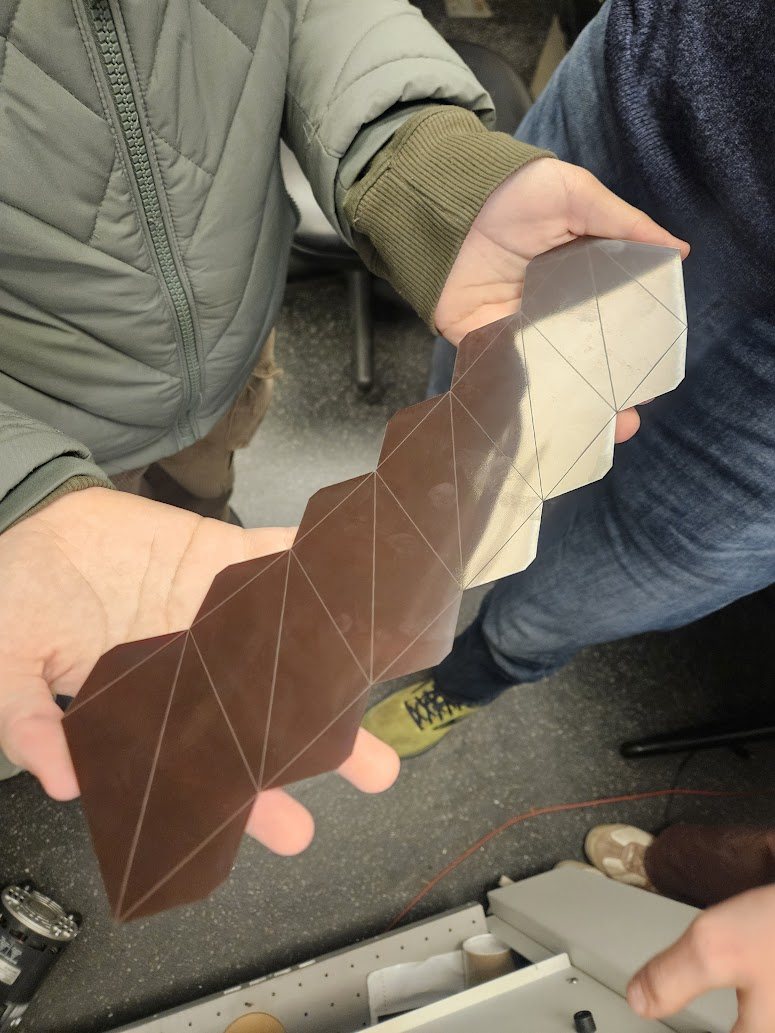
Laser-cutting the crease pattern into PET. -
03
Week 3: Assembly
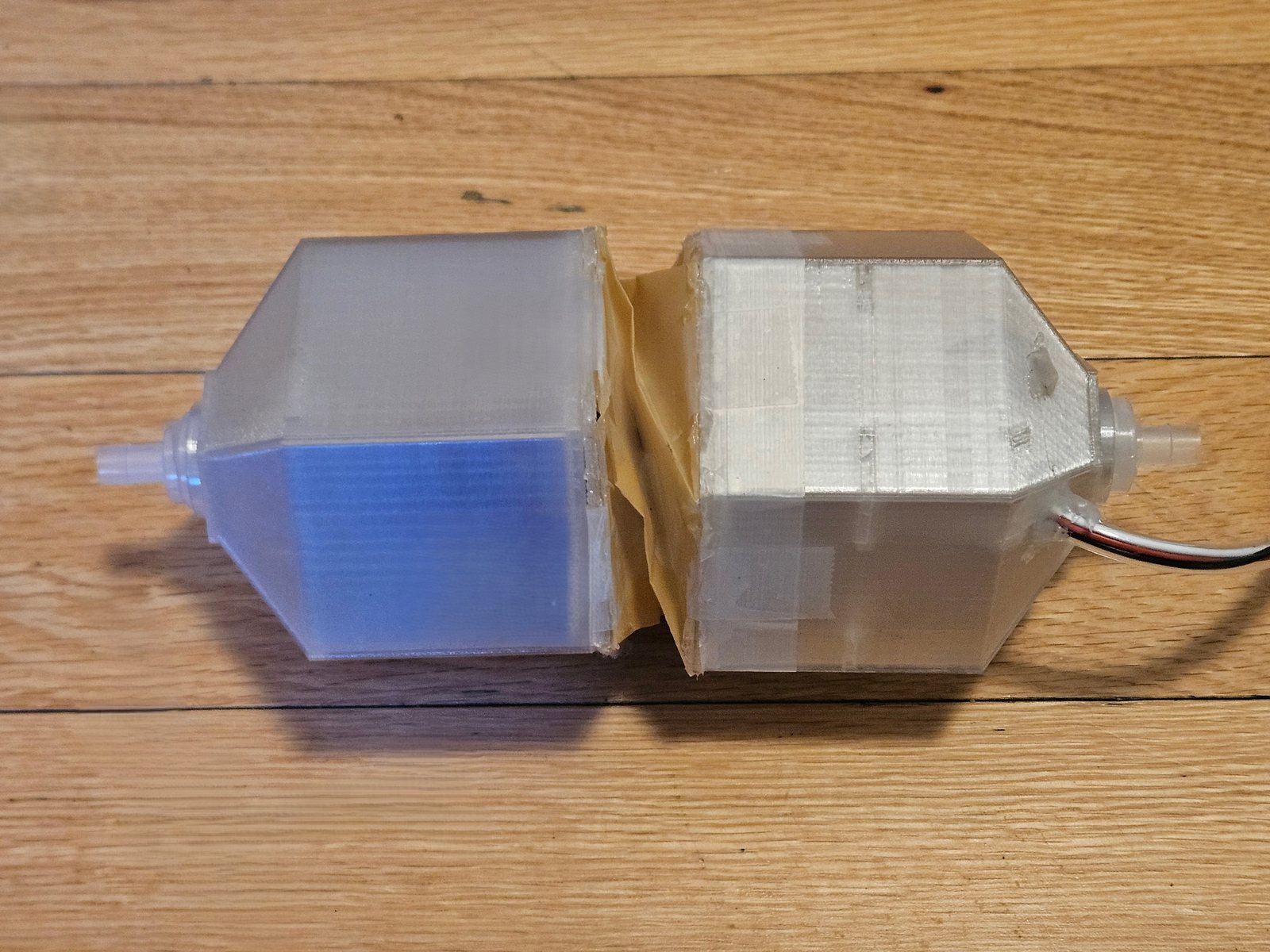
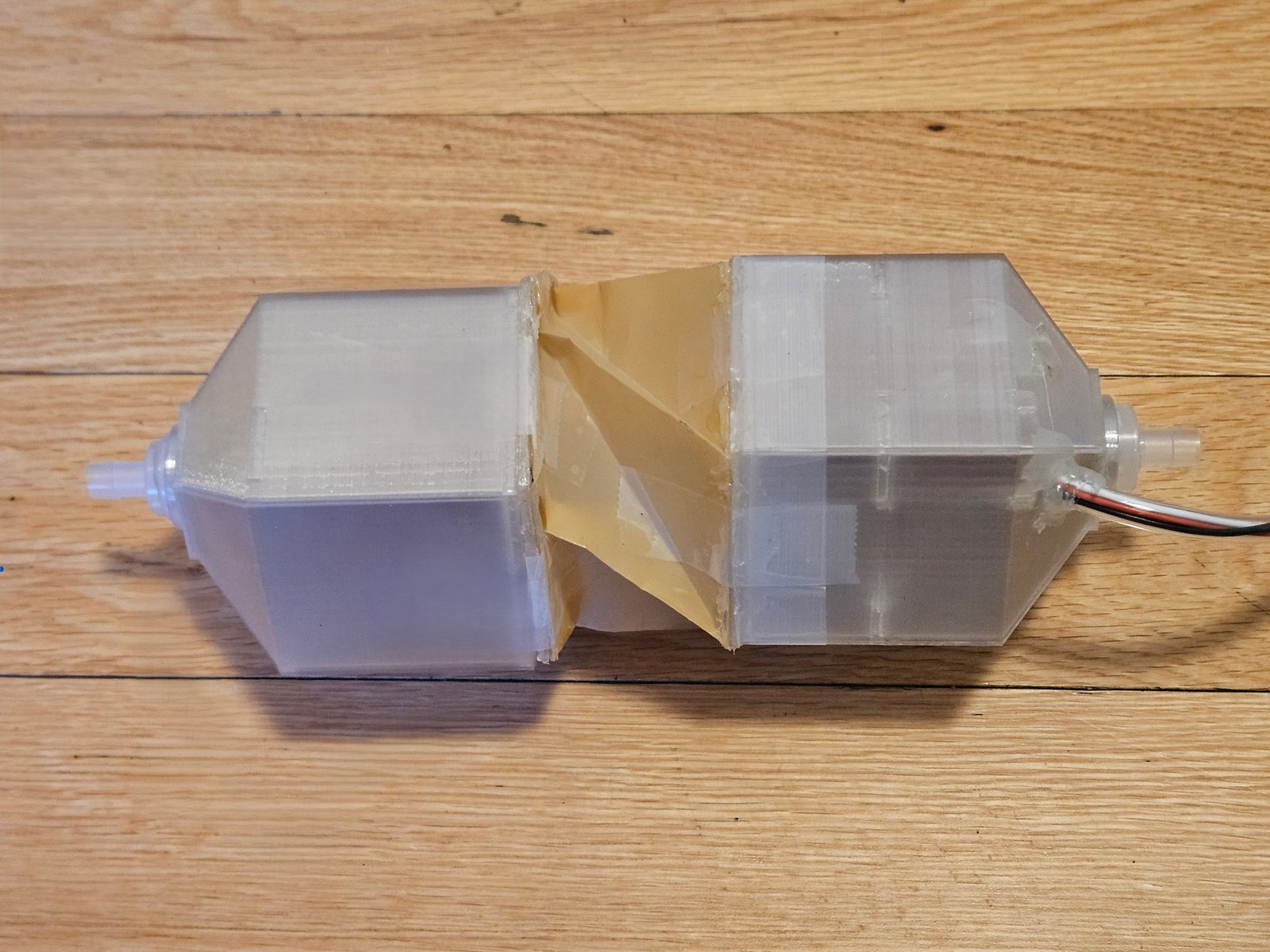
Most of the final prototype components were 3D printed for the ease of manufacturing and prototyping capabilities. The one-way valves and motor were bought from Amazon. All of the components were assembled according to the CAD model created. Where possible, screws were used to affix pieces, as the goal was to make it easily prototypable. For the Kresling and the interface between the Kresling and the end caps, a 2-part epoxy was used to ensure a stiff connection. Additionally, to waterproof the assembly, a layer of silicone was applied after the epoxy dried on all connections.
The Kresling snapping between states.
Future Work
There are many ideas we have for further work. The ideas fall under three main topics: manufacturing, Kresling, and electronics. For manufacturing, there were several parts were made from 3D prints due to time constraints, and should be made from other materials. This will prevent binding between the two D shafts as they slide, as it will reduce the friction. Along these lines, the arm of the servo (coupler from the output shaft of the motor to turning application), came with the servo and was made of a cheap, thin, and delicate plastic. In future iterations of the project, a different arm would be used. There is future work that could be conducted involving the Kresling. Although the theory pointed to a crease pattern and PET plastic worked very well in terms of material, there are many thicknesses of PET and none of our theory points to a specific thickness, as it all assumes the Kresling is made out of infinitesimally thin panels. While we were able to test out a couple PET thicknesses, further work will be conducted on a wider range to better assess how it impacts the salps movement. Finally, the electronics are currently floating at the top of the water, which could affect the flow of the water around the salp, and thus the motion of the salp robot. Thus, in future iterations, the electronics should be stored within the salp. This will require careful packaging to ensure it is both as small as possible and totally waterproof.
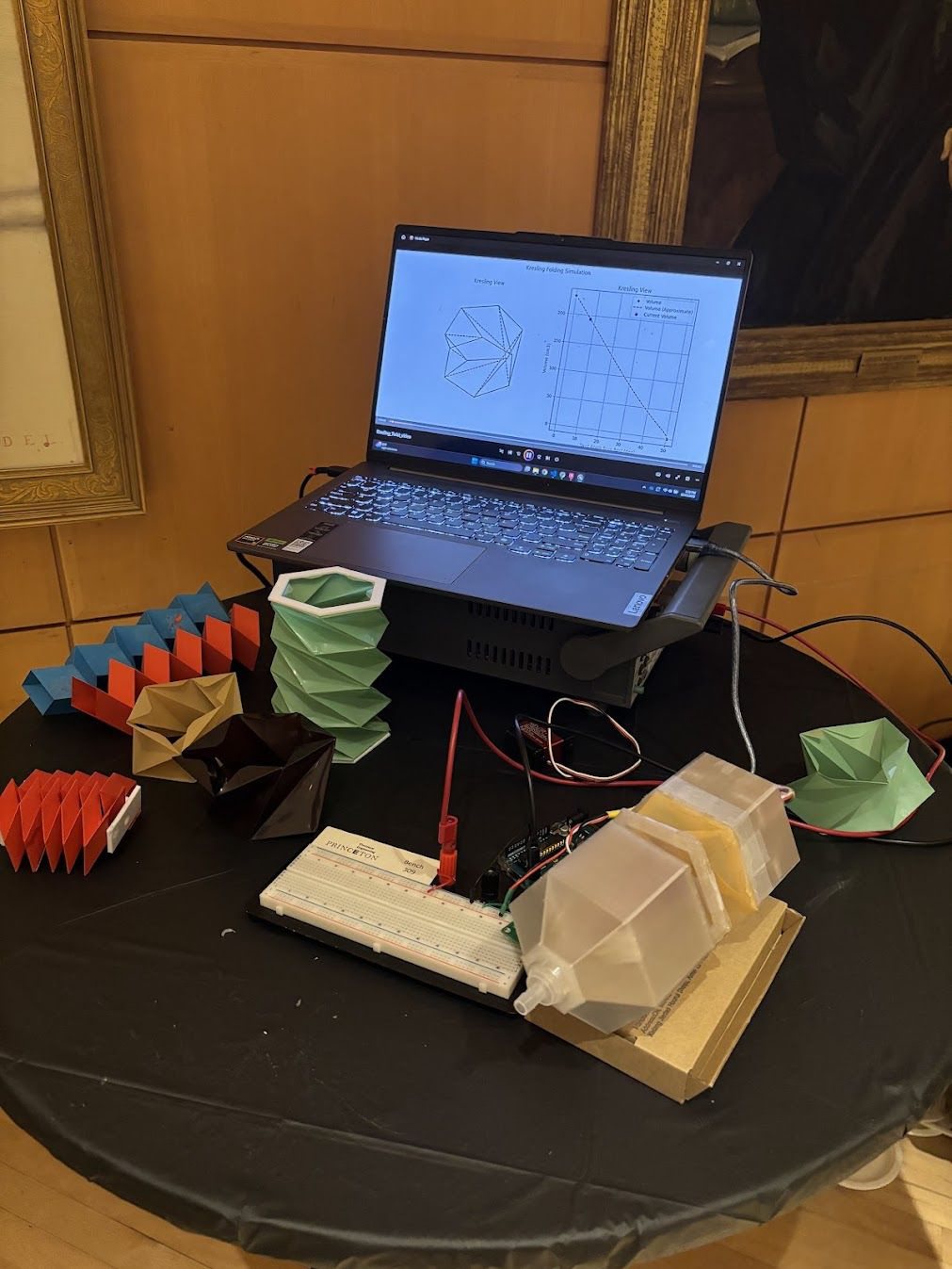
More photos