2025
Plant-Sitter: A Soil Moisture and Light Level Monitoring System
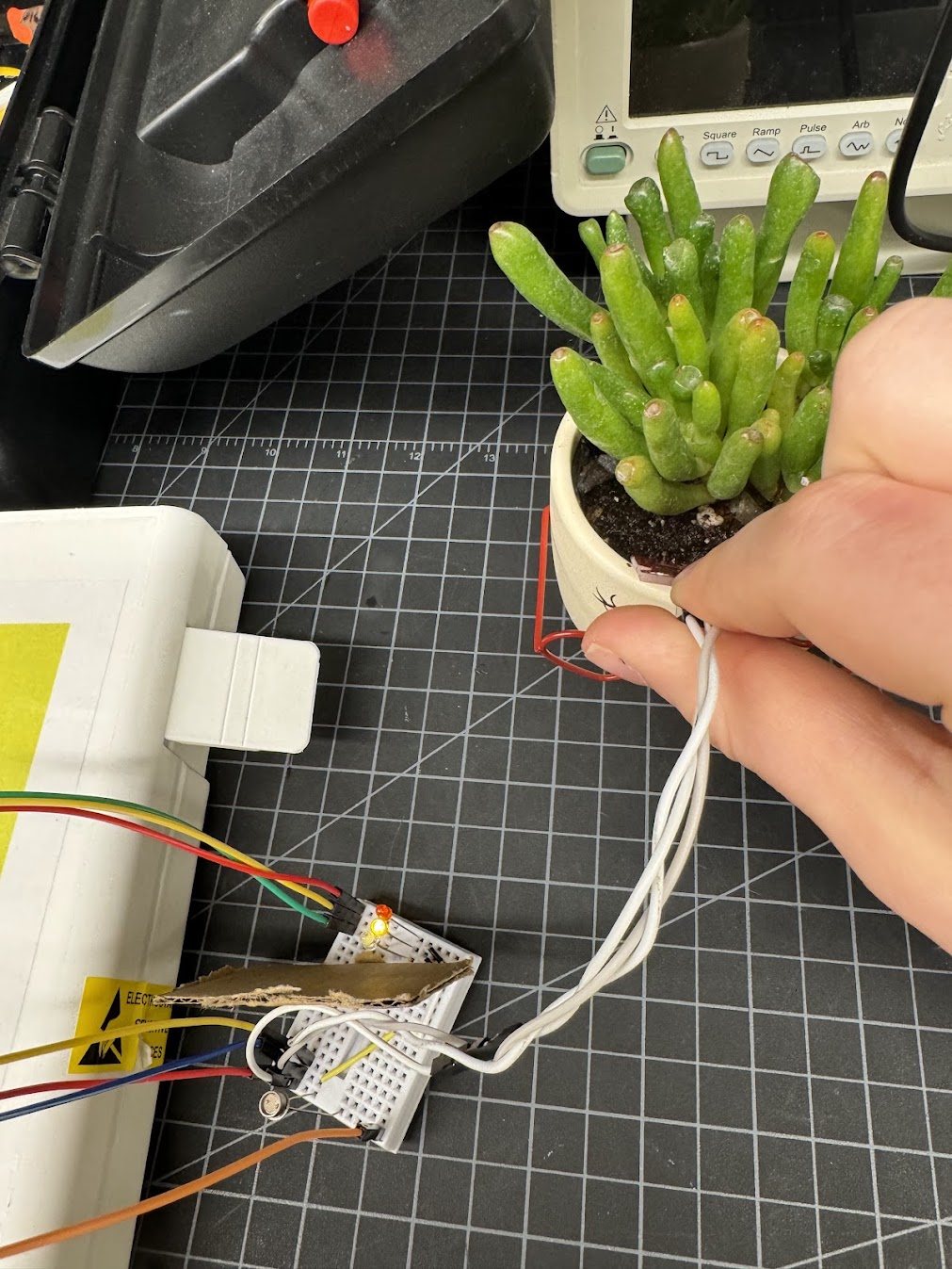
Plant-Sitter was created as a final project for my introduction to circuits class. It acts as a plant-health monitoring system by measuring the soil moisture and light levels of a plant.
- Role
- Designed and built circuit, assisted with programming and debugging
- Team
- Team of 2
- Course
- ECE 203 Electronic Circuit Design, Analysis and Implementation
- Tools
- Arduino, C++
- Links
- Lab report (PDF)
- 1lab session
- 2sensors
- 3LED states
Background
For the final project of ECE203: Electronic Circuit Design, Analysis and Implementation, me and a partner constructed and programmed a plant-sitter device in a single lab session. The primary objective of the project was to design and build a device that monitors the soil moisture and light levels of a plant to ensure optimal growing conditions. By integrating moisture and light sensors with a microcontroller, the device aimed to automate the monitoring process and provide feedback to users. Specific objectives included measuring soil hydration levels, assessing light intensity, processing sensor data through a microcontroller, and indicating results through LED lights in real-time.
System Overview
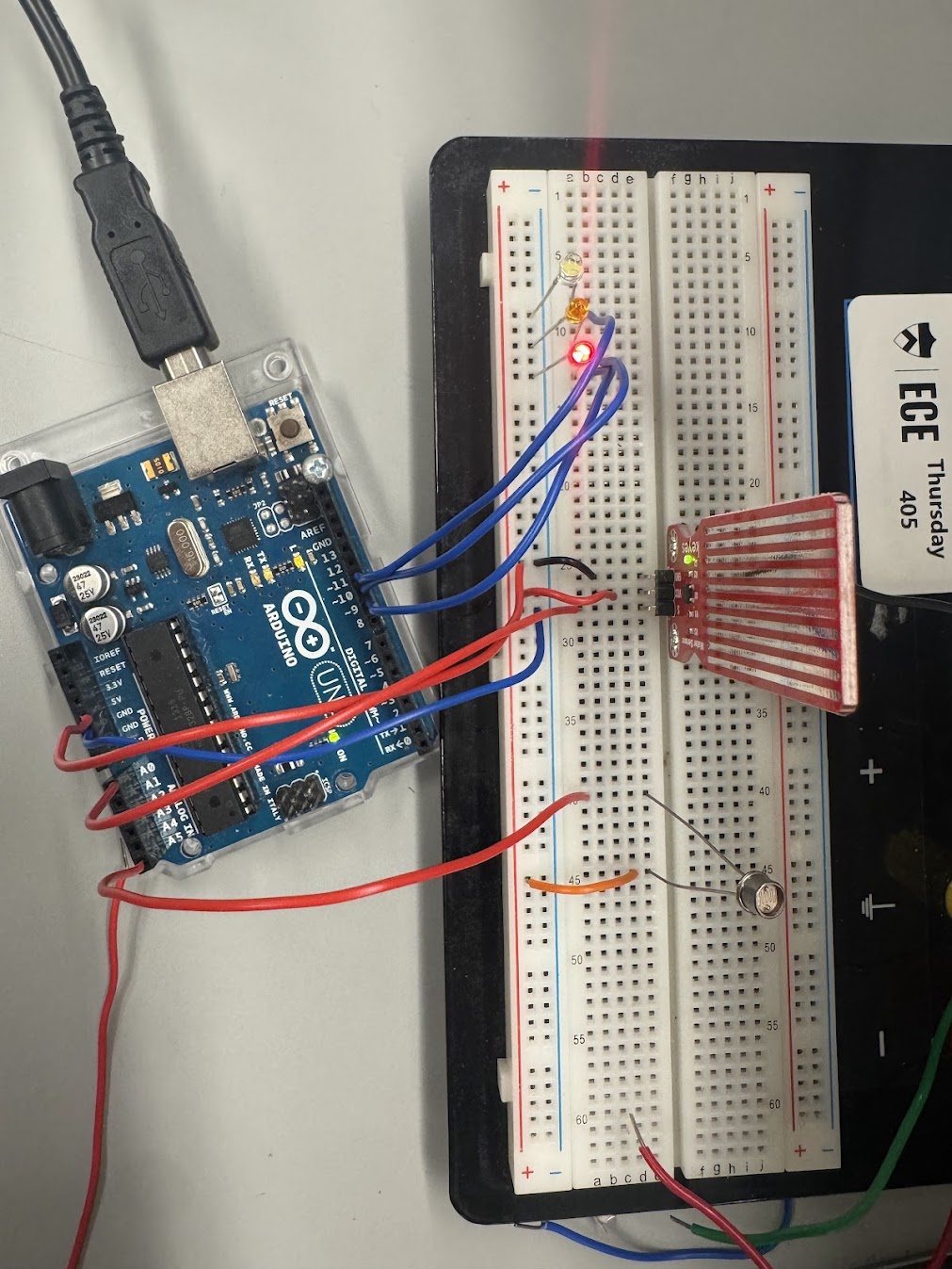
The Plant-Sitter system consists of three main subsystems: sensors (water and light sensors), a microcontroller, and an output mechanism. The water sensor (from Keyestudio) measures hydration levels in the soil by detecting changes in resistance, which is then converted into a voltage signal and sent through one of the analog input pins of the Arduino. This water sensor model was chosen because its shape enables easy measurement of soil moisture. Similarly, the light sensor measures ambient light intensity and transmits the data through one of the analog input pins to the microcontroller for analysis. The Arduino Uno microcontroller was selected due to its compatibility, ease of use, and sufficient processing capability. It processes sensor inputs, applies threshold comparisons, and triggers the output mechanisms. The output mechanism includes LEDs (connected to the Arduino through GPIO pins) to visually indicate soil moisture and light levels. The color of the LEDs indicate soil moisture: white LED indicates that the soil is wet, yellow LED indicates that the soil is moist, and red LED indicates that the soil is dry and that the plant needs to be watered. Light level is indicated by the brightness of the LEDs: if there is sufficient light in the environment, the LED would be dim, and if light in the environment is insufficient, the LED would shine bright, supplying extra light to the plant.
Design Challenges
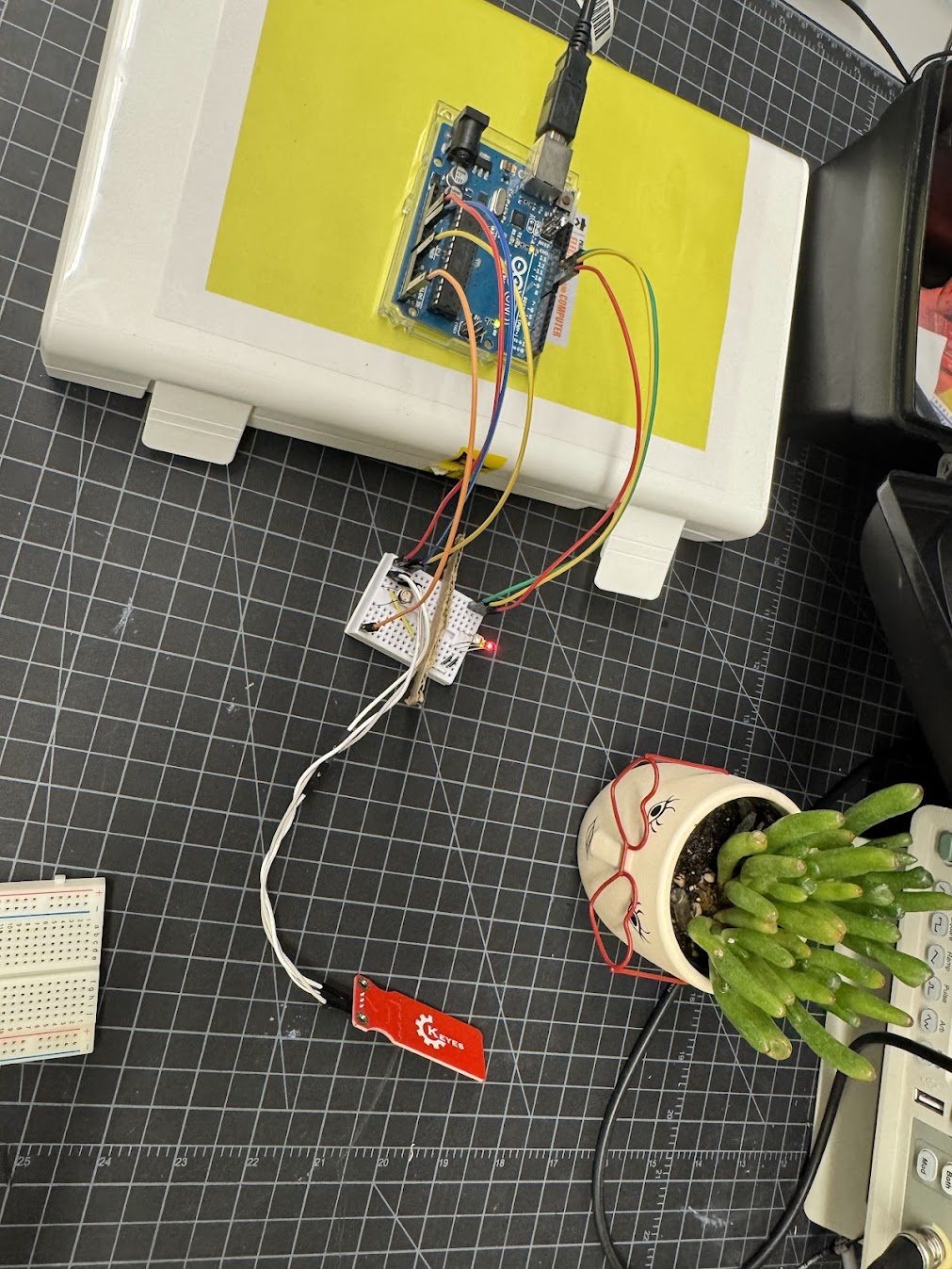
The project faced challenges such as difficulties in determining optimal threshold values for soil moisture and light intensity. To address these issues, different moisture levels and light intensities were tried on the sensors to fine-tune thresholds. Additionally, the moisture sensor was initially not mobile enough to test the soil. The large breadboard was replaced with a smaller breadboard to allow for more physical flexibility in measurement.
Future Improvements
While the current design meets its intended objectives, there are opportunities for enhancement. The current design combines the indicators (LEDs) for moisture and light levels. Separating them - a set of three colored LEDs to indicate moisture level and a separate LED to indicate light level and supply light to make up for insufficient light in the environment - may allow for more flexibility and better functionality in the aspect of light supply. These improvements may be the most cost effective and feasible in the short term.
Future iterations could also incorporate additional sensors, such as temperature and humidity sensors, to provide a more comprehensive environmental analysis. Solar power could be integrated to improve energy efficiency, particularly for outdoor use. Predictive analytics could also be added to suggest optimal care routines. These improvements have yet to be evaluated for feasibility and cost-effectiveness to ensure practical implementation.