2025
Ranque-Hilsch Vortex Tube
A Ranque-Hilsch Vortex tube is a mechanical device that is able to separate hot air from cold air without any electrical or moving parts: by creating a specific type of vortex using pressurized air, hot air exits one side of the device and cold air exits the other.
- Role
- Lead team of three, fully designed and manufactured device, assisted with testing
- Team
- Team of 3
- Course
- MAE 224 Integrated Engineering Science Laboratory
- Tools
- Mill, Lathe, Electronics, LabVIEW
- Links
- Lab report (PDF)
- 1week to design, build and test
- 0moving parts
- 3person team
Background
A Ranque-Hilsch Vortex Tube uses rotational flow to separate hot and cold air, creating a temperature delta with no moving parts. The rotational flow causes hot air to move towards the edges and cold air to move towards the middle. A vortex tube allows cold air to exit one end and hot air the other, creating a temperature delta. Although this is a very simple mechanism, traditional methods for heating/cooling are still far more efficient. This experiment was conducted as a Fluid Dynamics final project. The experimental goal was to determine if the amount of hot air exiting the tube changed the thermal efficiency.
Brainstorming
The main goals of the design were to make it as simple as possible: due to enforced time constraints, there was only one week to complete all manufacturing, assembly, and data collection. Every part was designed to be made in house from ordered McMaster stock.
Design
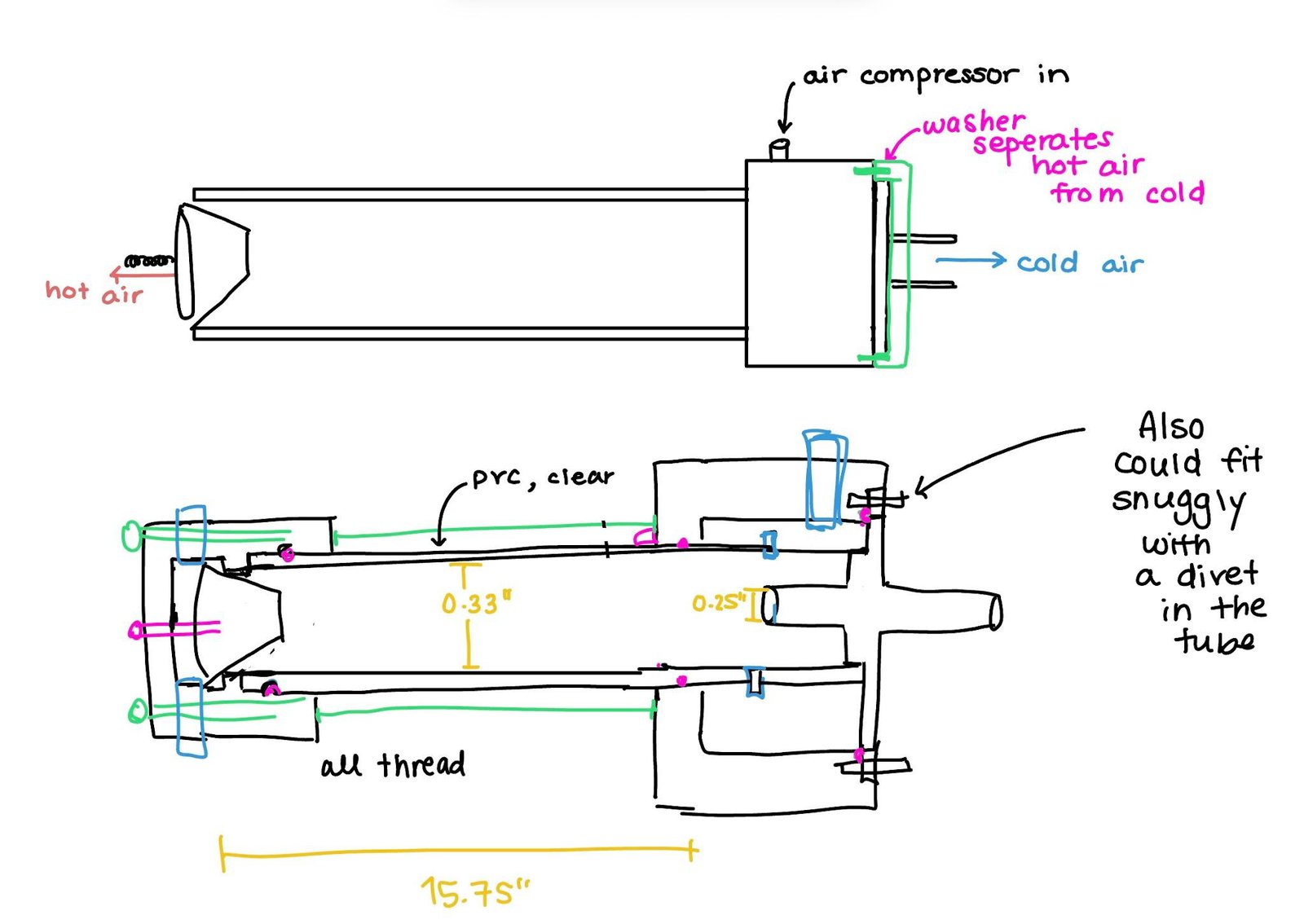
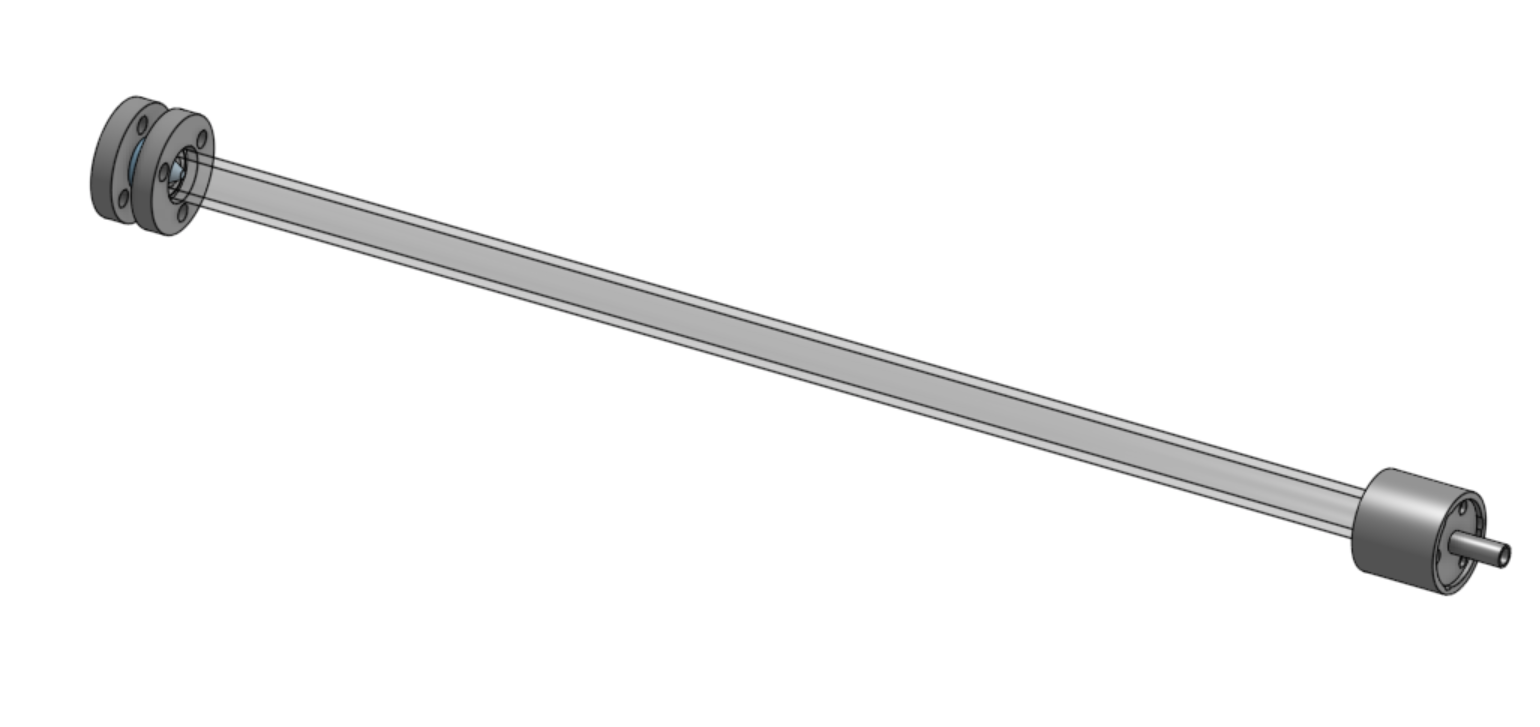
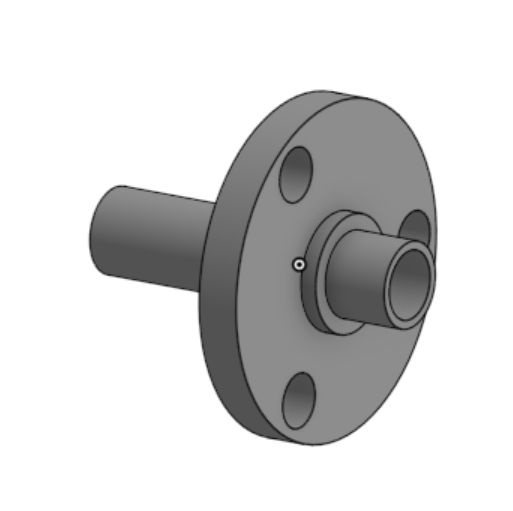
The design is a combination of hobbyist and industrial designs found online. Once the final sketch had been made (see brainstorming), I created a CAD model, pictured here. Hot air is able to exit on the right, where a stop cork funnels out only the edge of the rotating flow. This cork can be moved inwards and outwards to allow more and less flow leave. On the left side is the cold outlet and the compressed inlet. The compressed air comes in at a tangent to the inlet interior, facilitating the vorticity.
Manufacturing
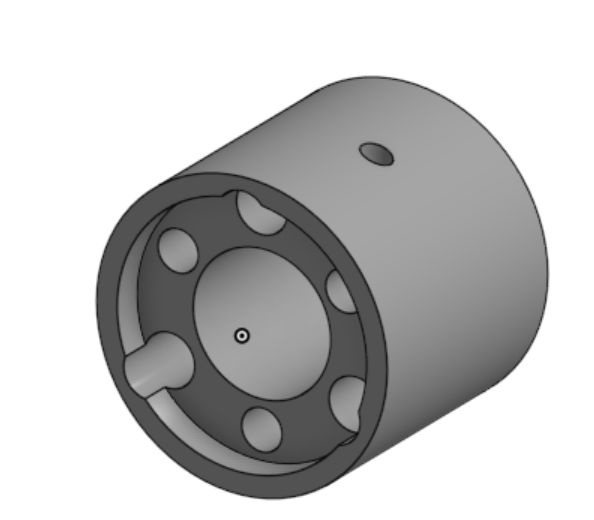
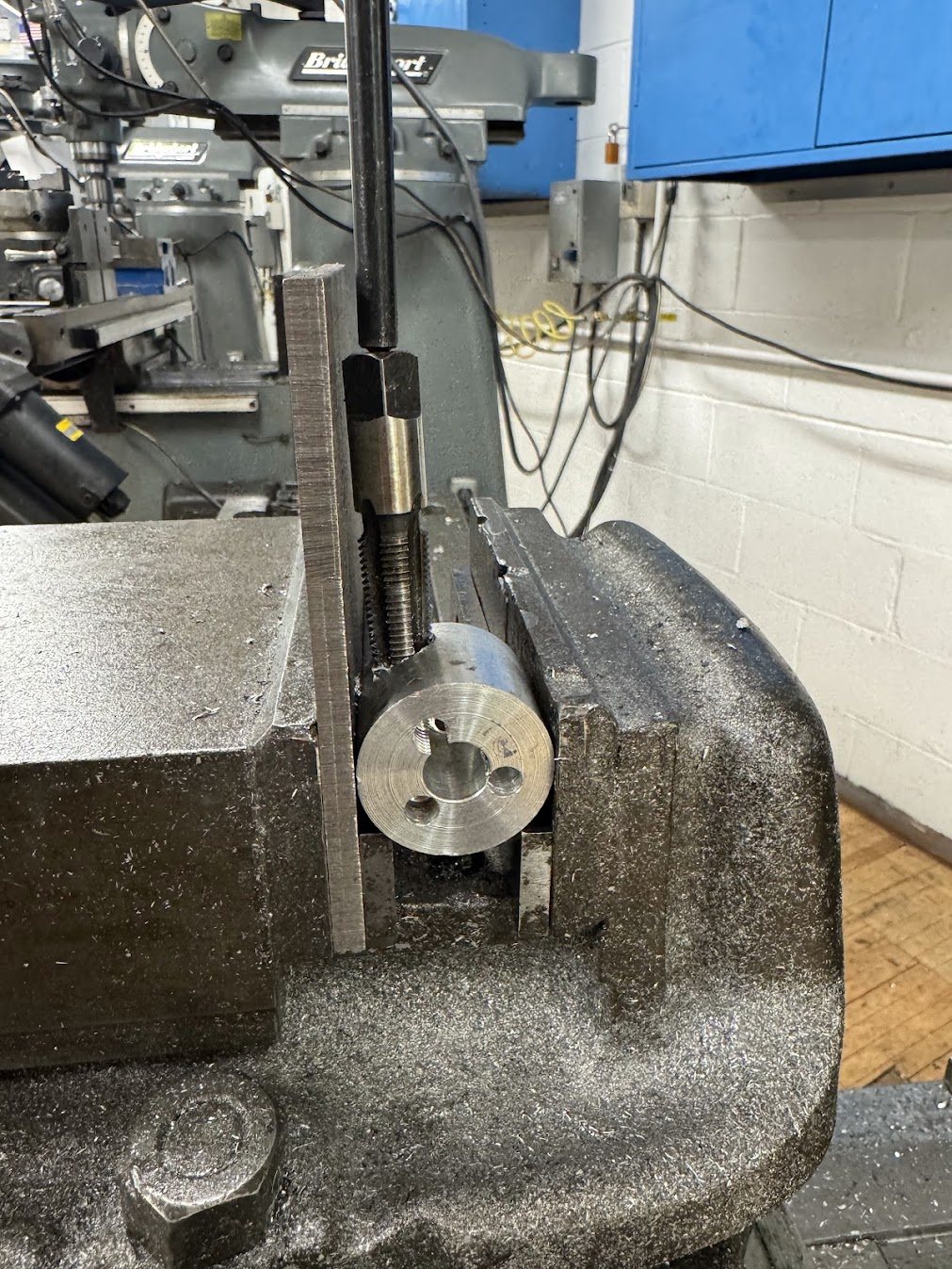
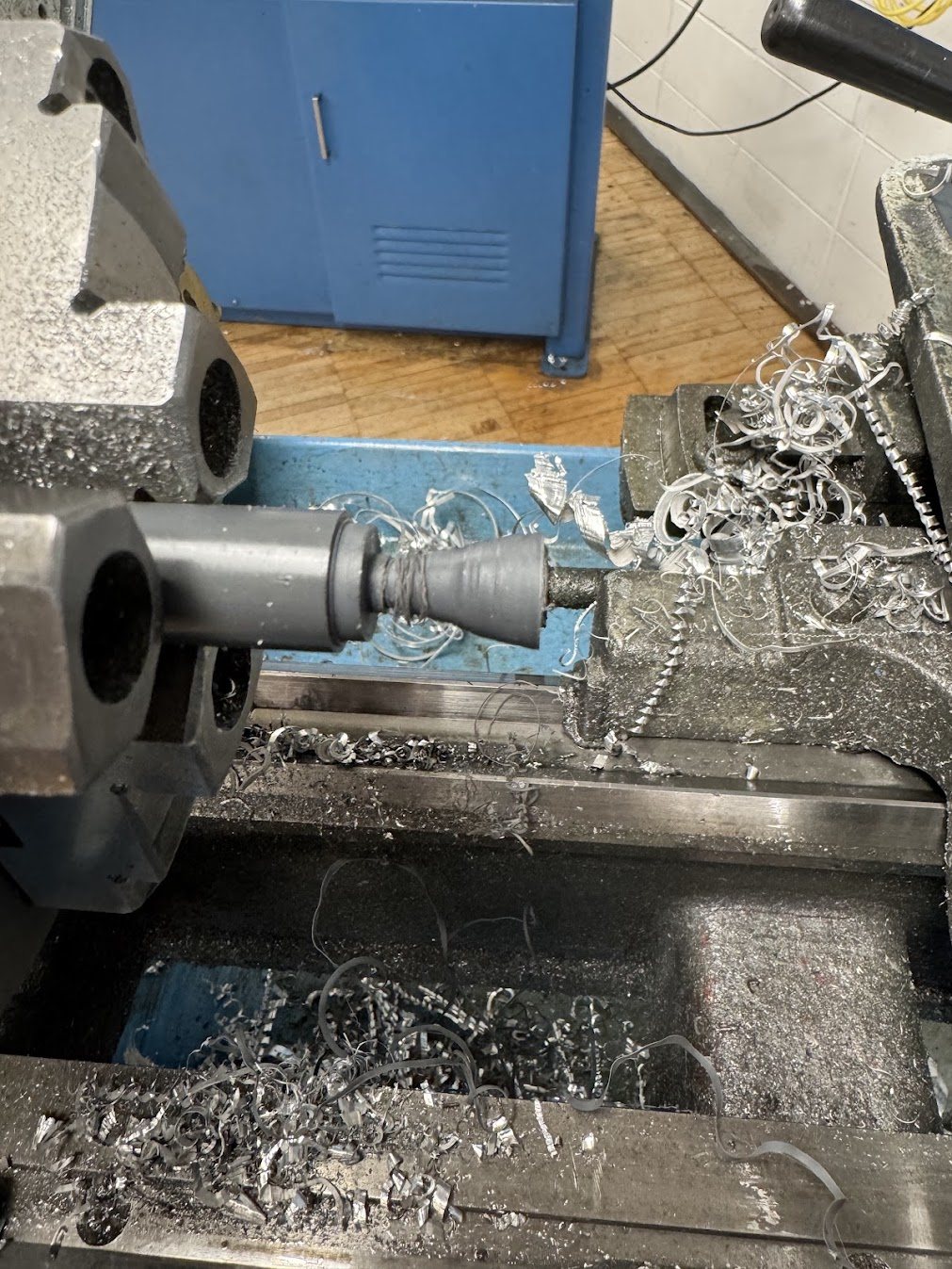
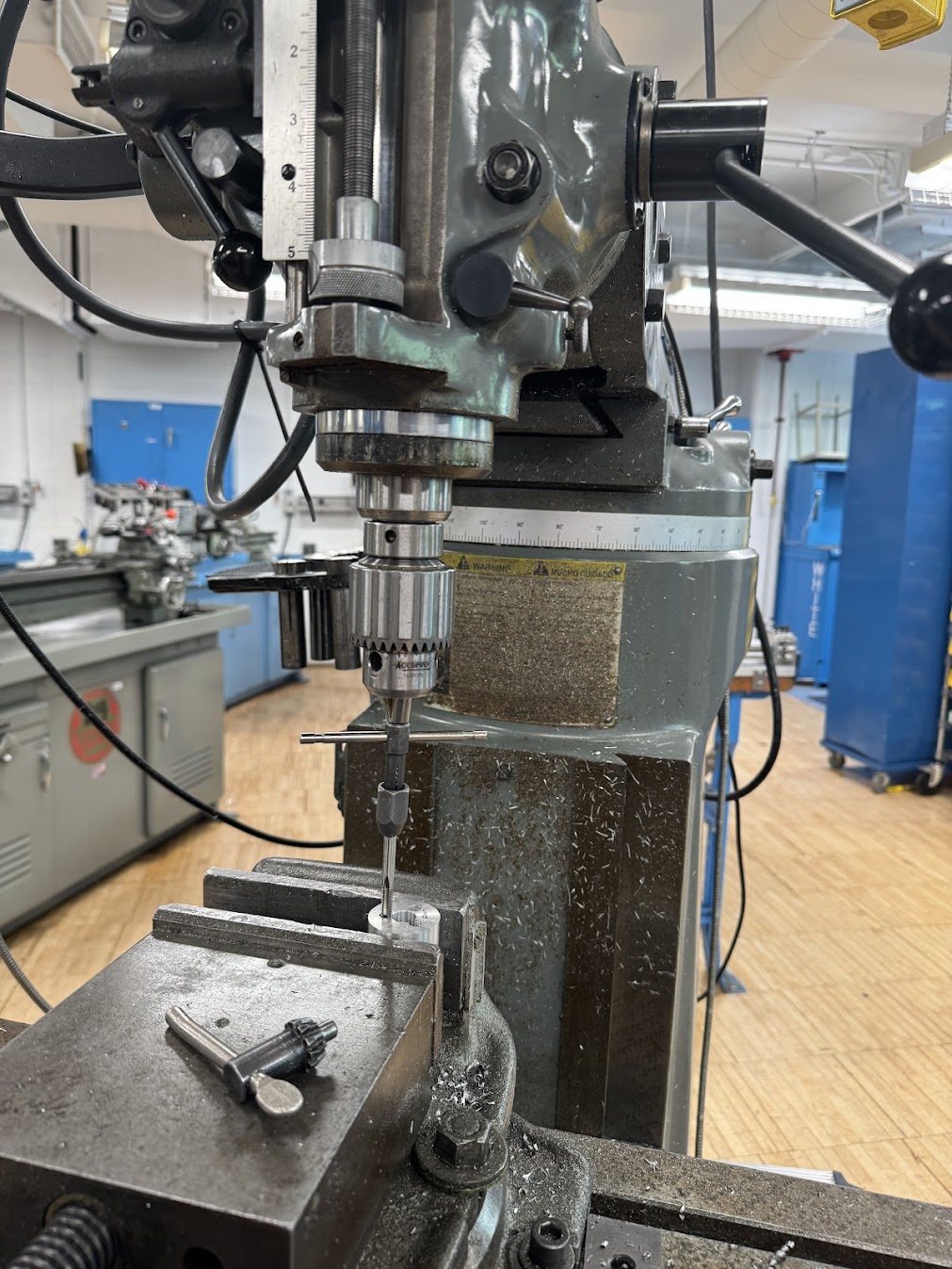
All parts were manufactured in house. I used a mill, lathe, drill press, band saw, tapping equipment and hand drill during the duration of manufacturing. The hardest part to manufacture was the tangential inlet, which needed to be tapped for the air compressor connection. Pictured here is the jig to tap that hole.
Testing
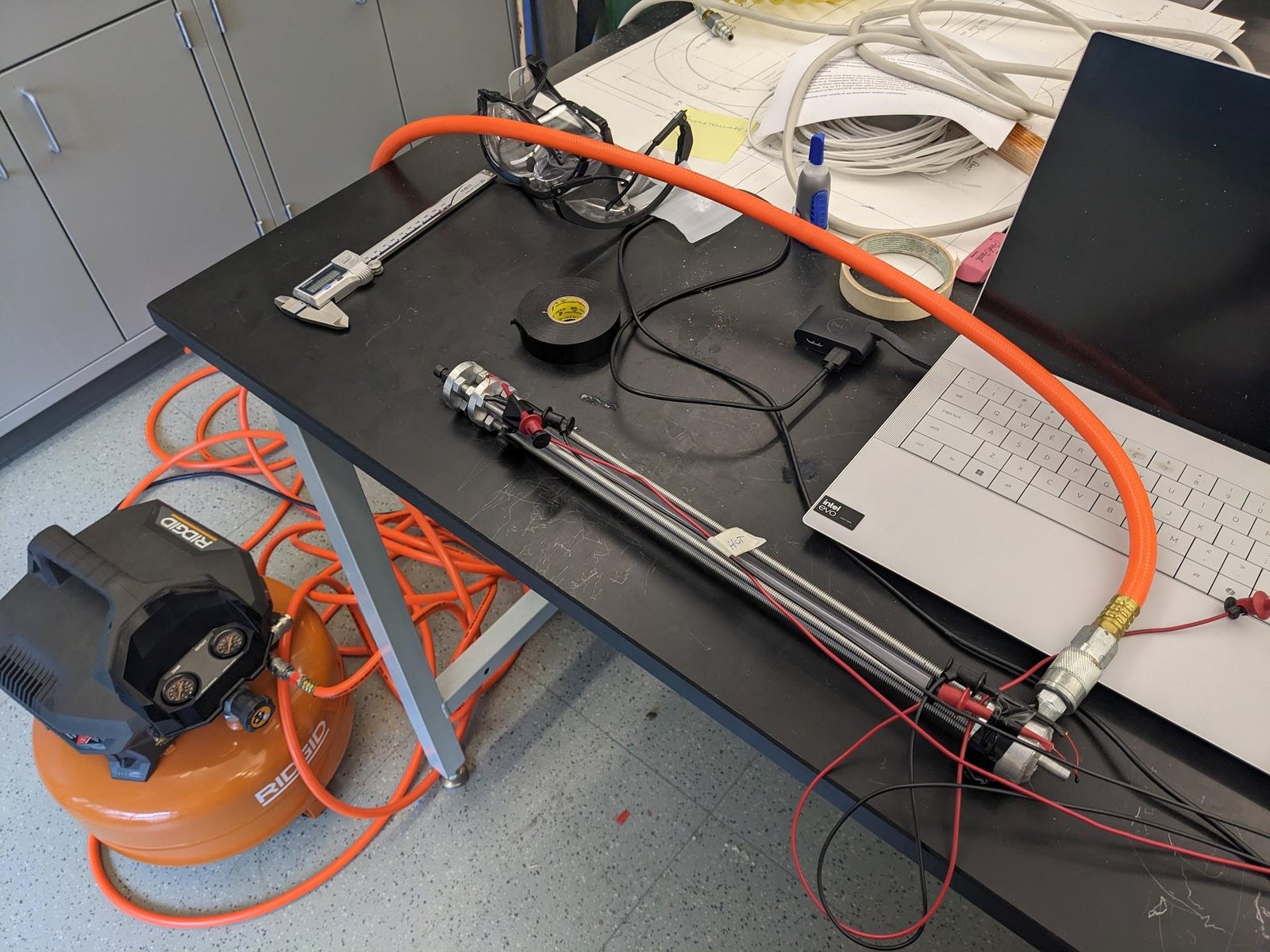
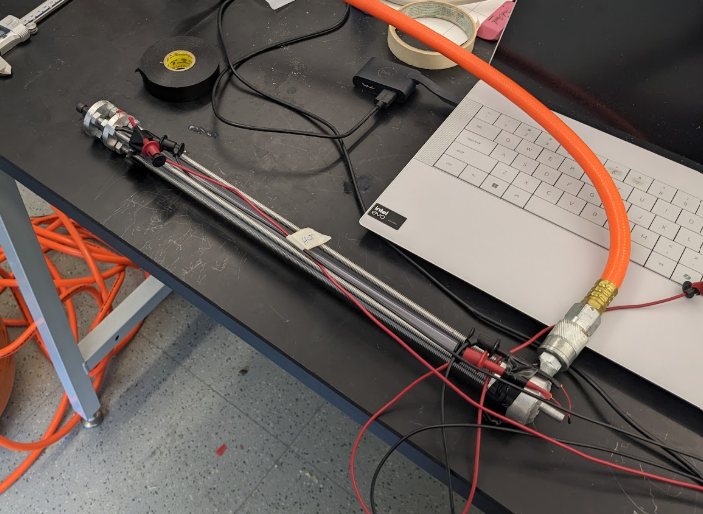
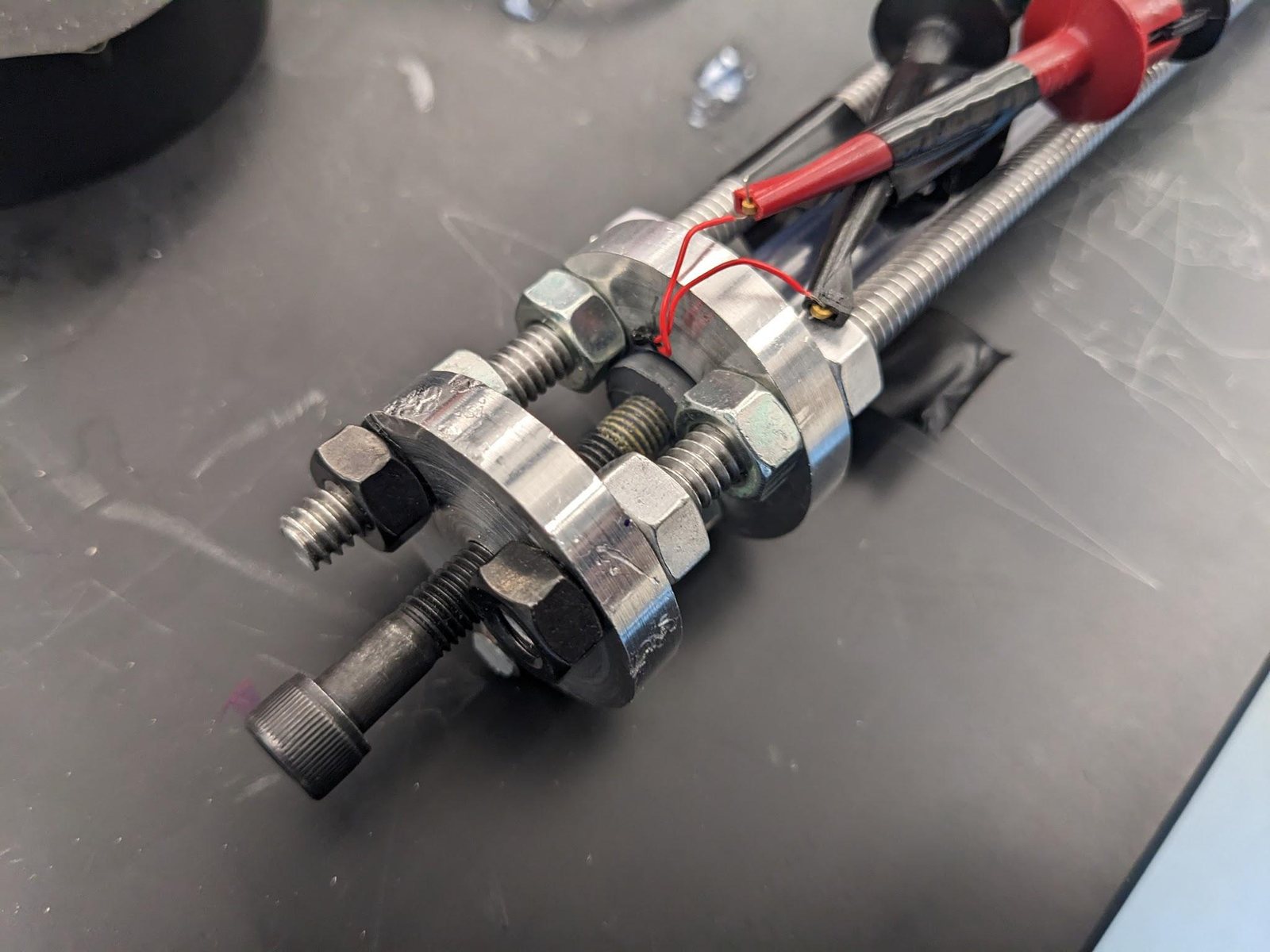
Once manufactured, everything was assembled, and thermocouples were added to each end to capture the temperature. The thermocouples recorded data over time using LabVIEW. Data was captured for a variety of valve opening positions.
Results
Analysis of the data supported the theoretical expectation that temperature at the hot end was higher than that of the cold outlet. However, the data did not support the hypothesis that as the valve on the hot end was slowly closed, the temperature difference between the hot and cold outlets increased. The system was able to generate a measurable temperature separation, with the hot and cold ends becoming more extreme. However, the efficiency of the tube shown by the COP was lower than traditional technology such as heat pumps. There was also no apparent relationship between coefficient of performance and position of the valve.
While the overall trends in the data successfully demonstrated the functioning of the vortex tube and its ability to separate compressed air into cold and hot air streams, the inaccuracies can be attributed to the inaccuracies in measuring data, possible leaks when creating the epoxy sealing, and minor errors from assuming conditions during the calculations portion of the experiment. Despite these factors, the results overall follow the theoretical predictions.
Overall, this experiment was successful in demonstrating the functionality of the vortex tube and its ability to separate compressed air into hot and cold streams. Though the efficiency is lower than traditional technologies, this experiment provided valuable insight into how the valve positioning affects the temperature difference between the hot and cold ends. Future work could focus on improving measurement accuracy and reducing the possible sources of error to further improve the collected data, and therefore yield more accurate and reliable results.